Downtime from roller failure costs more than lost minutes—it hits your entire production chain. Your year-end roller maintenance plan must do more than check boxes; it needs to protect uptime with precision and foresight. This guide breaks down the steps to build a plan that tackles roller reconditioning, bearing inspection, and shutdown maintenance, so you avoid surprises and extend roller life. Learn more about implementing the right maintenance strategy.
Building a Roller Maintenance Plan
A solid maintenance plan for your rollers can drastically reduce unexpected downtimes. It ensures that your production line runs smoothly and cost-effectively.
Key Elements of Maintenance Plans
Understanding the key elements of a maintenance plan is crucial. It starts by identifying all critical roller components that need regular checks.
-
Regular Inspections: Schedule routine checks to catch early signs of wear.
-
Detailed Documentation: Keep records of maintenance activities and findings.
-
Scheduled Replacements: Plan ahead for parts that have predictable lifespans.
These elements form the backbone of any successful maintenance strategy.
Importance of Downtime Reduction
Reducing downtime is not just about keeping the machines running. It’s about maintaining your entire operation’s efficiency.
When you minimize downtime, you not only save on immediate repairs but also prevent cascading delays in production. Efficient roller maintenance directly impacts your bottom line.
Predictive vs. Preventive Maintenance
Predictive and preventive maintenance each have their place. Preventive maintenance focuses on scheduled activities, while predictive maintenance uses data to anticipate failures.
Choosing the right mix of both can optimize your resources. Predictive maintenance allows you to act before issues arise, while preventive ensures consistent upkeep.
Steps for Year-End Maintenance
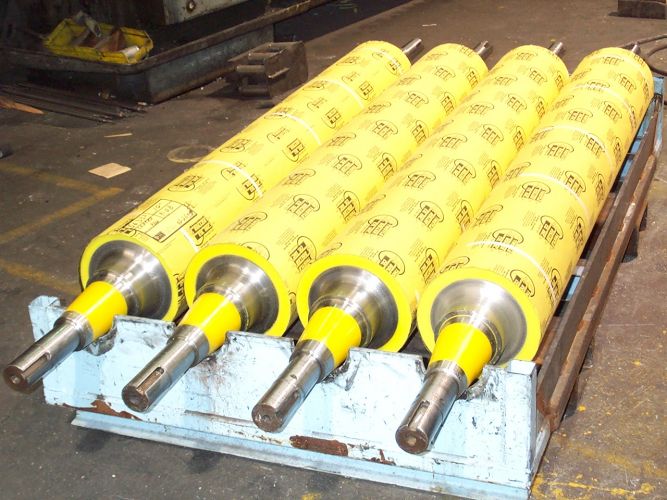
Your year-end maintenance plan should be comprehensive. It must cover all aspects of roller care to prepare for the following year’s demands.
Roller Reconditioning and HVOF Coating
Start with roller reconditioning to restore surfaces to like-new condition. HVOF coating can be applied to protect against wear and extend the rollers’ service life.
HVOF coating provides a high-strength layer that can withstand harsh conditions. It’s an upgrade that transforms the roller, reducing future maintenance needs.
TIR and Dynamic Balancing
Total Indicated Runout (TIR) and dynamic balancing are critical for smooth operation. They ensure that rollers rotate evenly, preventing vibration and uneven wear.
Correcting TIR and balancing rollers reduces the risk of unexpected breakdowns. It’s a straightforward way to enhance roller performance.
Bearing and Journal Inspection
Bearings and journals are often overlooked but are vital for roller functionality. Regular inspection can prevent catastrophic failures.
Replace worn bearings and repair any journal defects to keep rollers operating smoothly. This proactive step can save significant downtime.
Optimizing Roller Performance
Optimizing roller performance involves more than maintenance. It requires fine-tuning various operational aspects.
Nip Pressure and Parallelism
Nip pressure and parallelism are key to consistent product quality. Adjusting these factors ensures even material handling and reduces material waste.
Proper alignment can prevent product defects and improve the overall efficiency of your production process.
Thermal Growth Management
Thermal growth can affect roller dimensions and performance. Managing it is crucial for maintaining precision in operations.
Implement cooling systems or material choices that accommodate temperature fluctuations. This management prevents warping and misalignment.
Core Exchange and Precision Grinding
Core exchange programs offer quick replacements, minimizing downtime. Precision grinding restores rollers to exact specifications.
These strategies ensure that rollers are always ready to perform at their best. They represent a commitment to maintaining high operational standards.
Frequently Asked Questions
What is the difference between predictive and preventive maintenance?
Predictive maintenance uses data to predict when maintenance should occur, aiming to fix issues before they arise. Preventive maintenance involves regular, scheduled tasks to prevent problems.
How does HVOF coating benefit roller maintenance?
HVOF coating provides a durable, wear-resistant surface that extends the life of rollers, reducing the need for frequent replacements and repairs.
Why is dynamic balancing important for rollers?
Dynamic balancing ensures even rotation, reducing vibrations and wear. It helps maintain smooth operation and prevents premature failures.
What is the role of TIR in roller maintenance?
TIR measures the deviation in roller rotation, identifying eccentricities that can cause uneven wear and operational issues. Correcting TIR enhances roller longevity.
How can managing thermal growth impact roller performance?
Thermal growth affects roller dimensions under temperature changes. Managing it prevents misalignment and ensures precision, maintaining consistent quality in production outputs.
Secure your roller service slots for the critical year-end rush.