
Baseball & Softball
Pitching Machine Wheel Recovering
Worn wheels on professional-grade pitching machines throw wild pitches and slow balls. We recover them with new polyurethane in volume, for pitching machine manufacturers, dealers and service shops, and for teams, colleges and batting cage facilities running multiple machines.
Your wheels are the pitcher
On a wheel-type pitching machine, the tread does all the work. The ball is pinched between the spinning wheel and the other wheel or a pad, and the tread's grip sets the speed, the spin and where the pitch ends up. When that tread wears, cracks or hardens, the machine stops throwing the pitch you set.
Pitching machine manufacturers, dealers, service shops, college and pro programs, and multi-cage facilities send us their wheels by the batch. If the hub is sound, we strip the old tread, cast new polyurethane onto it, then grind and balance every wheel in our own shop. Thistle Roller has been recovering rollers for 70 years, and a pitching machine wheel is a small, fast roller.
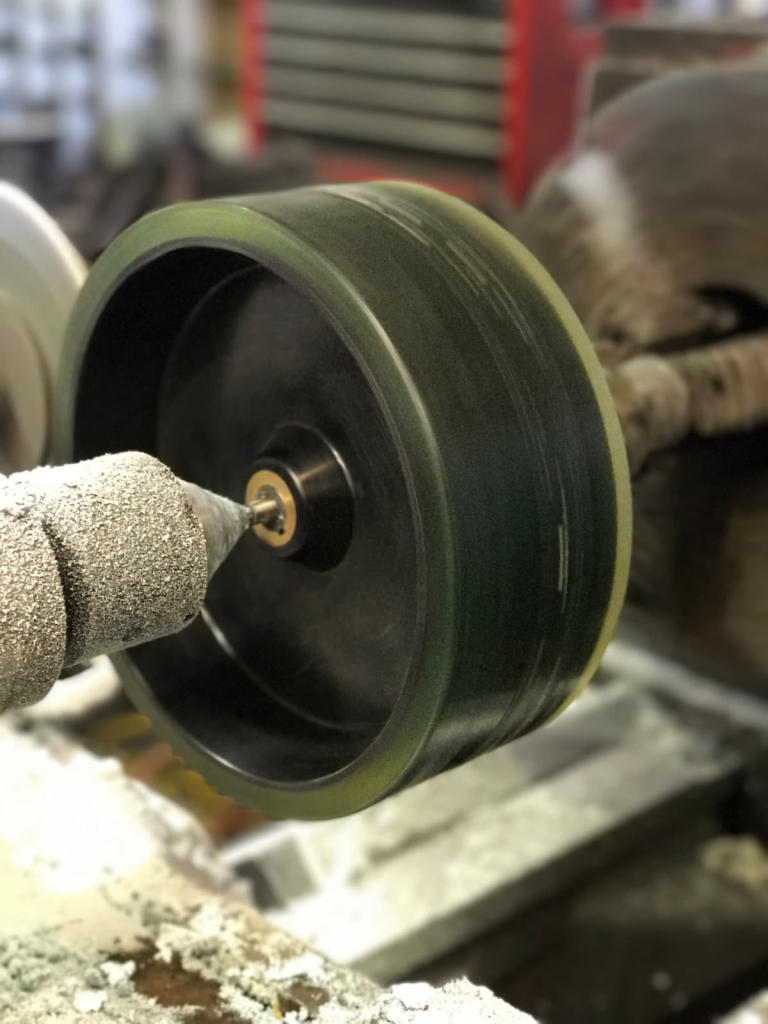
Signs your pitching machine wheels need recovering
Most cages notice the pitches before they notice the wheels. Check the tread if you see any of these:
Inconsistent pitches
Balls sail high, drop short or drift side to side at the same setting. A worn or uneven tread grips each ball differently.
Lost speed
The machine can't reach the speed it used to. As the tread wears down, the wheel's diameter shrinks and its grip on the ball drops.
Cracks, chunks or flat spots
Missing pieces of tread, cracks across the surface or a flat spot you can feel by hand. These get worse fast at pitching speed.
A hard, shiny tread
Treads harden and glaze with age and heat. A slick tread slips on the ball instead of gripping it.
One-wheel, two-wheel and three-wheel machines
One-wheel machines pinch the ball between a single wheel and a fixed pad. The whole pitch depends on one tread, so wear shows up quickly.
Two-wheel machines feed the ball into the gap between two wheels. Running the wheels at different speeds creates curveballs and sliders, so both treads need to match. We recover them as a pair.
Three-wheel machines add a third wheel for more pitch types and movement. We recover all three so they grip the same way. For baseball or softball, leather or dimpled balls, tell us what you throw and we'll match the polyurethane to it.
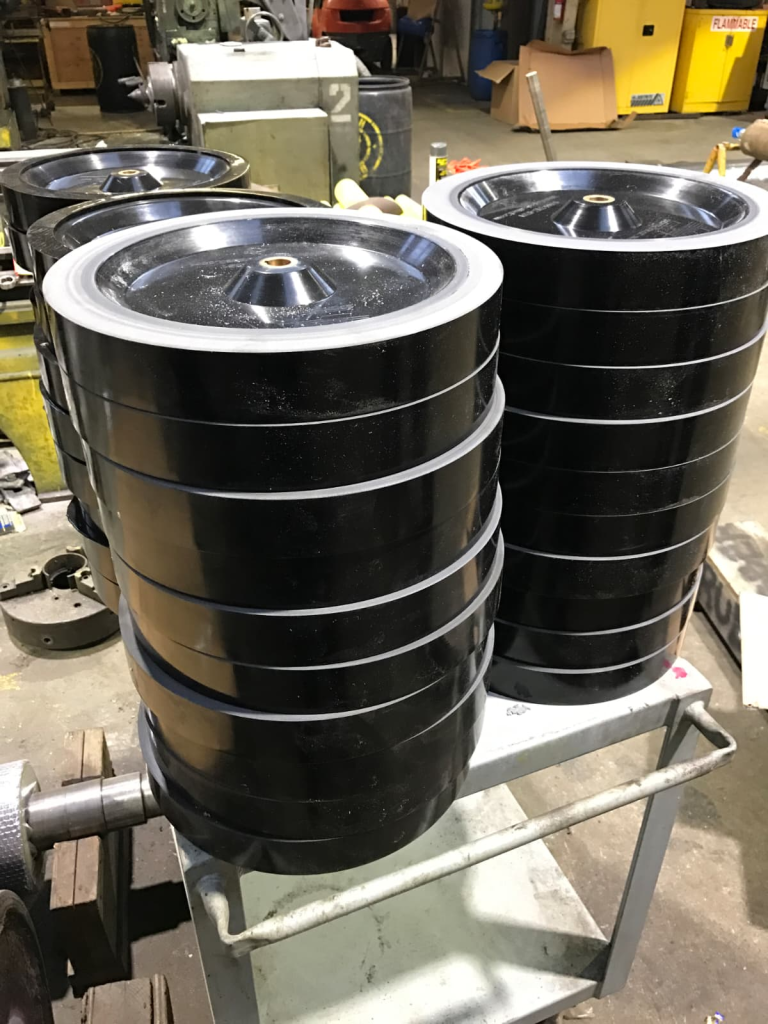
Flat or contoured, ground back to spec
Some pitching machine wheels have a flat tread. Others have a contoured or grooved tread that cradles the ball and keeps it centered. We recover both. Once the new polyurethane cures, we grind the tread to the profile your machine needs, with the finish you specify.
It's the same work we do every day for industry: custom rollers built to the customer's specs for material, finish, grooving and contour, held to tolerances tight enough for aerospace.
How it works
01
Send a photo
Email or upload a photo of the wheels, the machine type, the quantity, and baseball or softball.
02
Ship your wheels
Pull the wheels and send them in. We work from your existing hubs.
03
We recover them
Old tread off, new polyurethane on, then precision ground and balanced in our shop.
04
Back in the cage
Your wheels ship back ready to mount, with our 1-year warranty.
Pitching machine wheel questions
Is recovering cheaper than buying new wheels?
Often, because we reuse your hub. Send a photo and we'll quote it so you can compare.
Should I recover both wheels on a two-wheel machine?
Yes. The two treads need to grip the same way for straight, repeatable pitches, so we recommend recovering them together.
When should I send my wheels in?
In the off-season. Cages and teams are busiest from late winter through summer, so sending wheels in during fall or early winter keeps your machines ready for preseason.
Do you repair pitching machines?
No. We recover the wheels only. Motors, speed controls and frames stay with your machine's service provider.
How long does it take?
From a few days to a few weeks, depending on how many wheels and their condition. We give you a clear timeline up front.
Polyurethane wheel recovering by the batch
Building machines, servicing them or running a team with multiple machines? Send us a photo of the wheels and your quantities, and we'll quote the run.
Request a Quote