
Services
Home
Manufacturing
Manufacturing
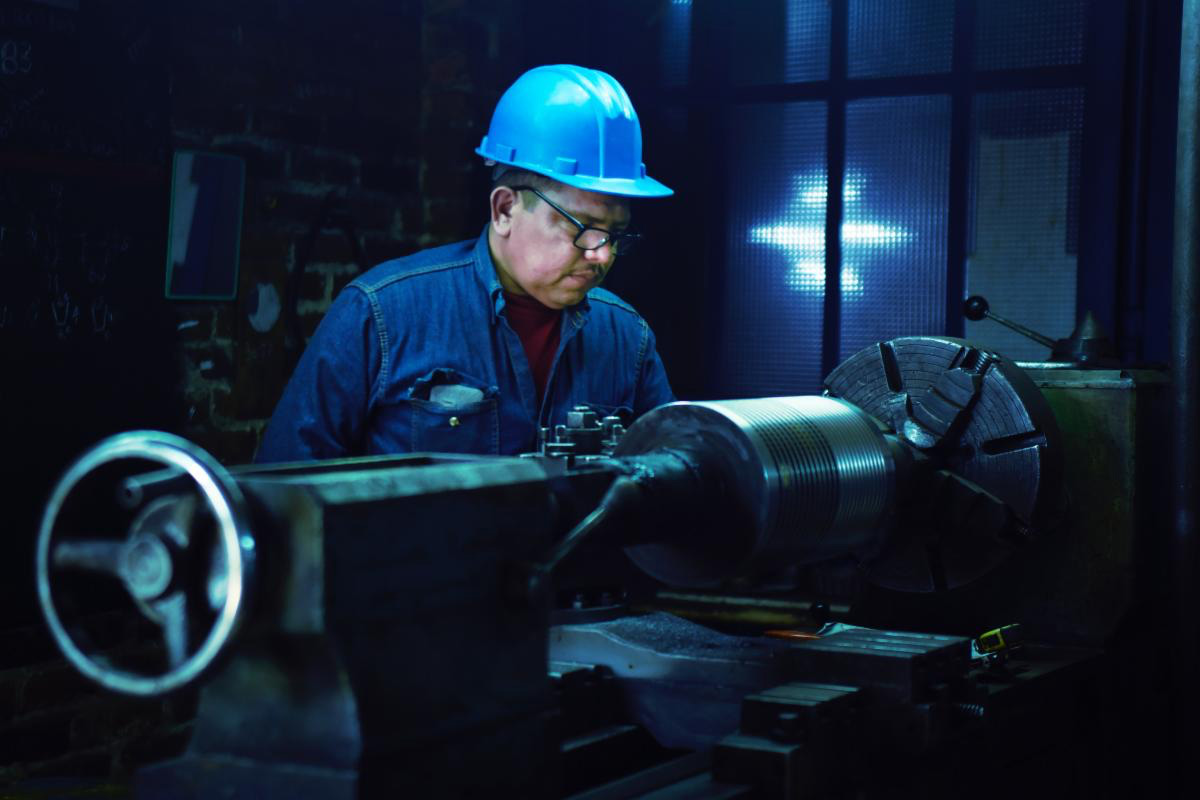
Precision Roller Manufacturing Built for Real-World Applications
Thistle Roller manufactures industrial rollers engineered for how they are actually used. Every roller is designed around the application, operating environment, materials, loads, and performance requirements it must meet in the field.
We manufacture rollers for new equipment, system upgrades, OEM replacement, and custom applications where standard solutions are not sufficient. The result is consistent performance, longer service life, and fewer production interruptions.
Roller Types by Application
Web Handling and Transport Rollers
Alignment Roller – Corrects lateral material position.
Backing Roller – Supports material during processing.
Banana Roller – Uses curved geometry to control web spread.
Bow Roller – Spreads material to reduce wrinkles.
Conveyor Roller – Moves material along a conveyor system.
Crowned Roller – Uses a raised center to assist tracking.
Edge-Guide Roller – Maintains consistent edge positioning.
Expander Roller – Applies outward force to flatten material.
Feed Roller – Introduces material into a process at a controlled rate.
Guide Roller – Directs material along a defined path.
Idler Roller – Supports material without driving it.
Lay-On Roller – Applies light contact to stabilize material.
Pick-Up Roller – Lifts material from a surface or stack.
Pull Roller – Draws material through downstream operations.
Rewind Roller – Winds material back into roll form.
Spreader Roller – Expands material width during transport.
Support Roller – Provides structural support under the web.
Take-Up Roller – Collects material at the end of a process.
Transfer Roller – Moves material between process stages.
Unwind Roller – Controls material release from a roll.
Wrinkle Roller – Reduces creasing during material movement.
Nip, Pressure, and Traction Control Rollers
Dancer Roller – Adjusts position to regulate tension dynamically.
Drive Roller – Actively powers material movement.
Metering Roller – Regulates material flow or coating thickness.
Nip Roller – Applies controlled pressure between paired rollers.
Pressure Roller – Maintains consistent contact force.
Squeeze Roller – Removes excess liquid or material.
Stretch Roller – Applies controlled elongation to material.
Tension Roller – Maintains consistent web tension.
Thermal and Temperature-Management Rollers
Chill Roller – Removes heat to stabilize material.
Cooling Roller – Reduces temperature during continuous operation.
Curing Roller – Supports temperature-based material curing.
Drying Roller – Assists moisture removal.
Heat Roller – Transfers heat to material surfaces.
Preheat Roller – Raises material temperature before processing.
Quench Roller – Rapidly cools material after heating.
Coating and Application Rollers
Applicator Roller – Transfers material to a surface.
Coating Roller – Applies a uniform coating layer.
Doctor Roller – Meters coating thickness.
Pad Roller – Delivers controlled contact coating.
Scraper Roller – Removes excess coating or residue.
Converting, Cutting, and Slitting Rollers
Anvil Roller – Provides a hardened surface for cutting.
Calender Roller – Smooths or compresses material.
Embossing Roller – Imprints patterns or textures.
Laminating Roller – Bonds multiple material layers.
Polishing Roller – Improves surface finish.
Slitting Roller – Supports material separation operations.
Surface-Contact and Media Rollers
Brush Roller – Cleans or agitates material surfaces.
Cleaning Roller – Removes debris or contaminants.
Felt Roller – Provides soft, compliant contact.
Rubber-Covered Roller – Offers grip and cushioning.
Vacuum, Air, Magnetic, and Specialty Rollers
Air Roller – Reduces friction using air support.
Anti-Static Roller – Reduces static buildup.
Ceramic Roller – Provides high wear and temperature resistance.
Chrome Roller – Offers hardness and corrosion resistance.
Floating Roller – Minimizes surface contact.
Grooved Roller – Channels air, liquid, or material.
Magnetic Roller – Controls ferrous materials.
Perforated Roller – Allows airflow or fluid transfer.
Steel Roller – Provides strength and dimensional stability.
Vacuum Roller – Uses suction to control material position.
Accumulation and Intermittent Motion Rollers
Accumulator Roller – Stores material temporarily.
Jogger Roller – Aligns or advances material incrementally.
Jogger/Stepper Roller – Combines alignment and indexed motion.
Stepper Roller – Moves material in indexed steps.
Bonding and Laydown Control Rollers
Couch Roller – Applies pressure during bonding or forming.
Marrying Roller – Joins multiple material layers.
Core Manufacturing Capabilities
In-House Precision Processes
All rollers are produced using controlled, in-house processes that support accuracy, durability, and repeatable performance.
Sandblasting, metal spray, precision grinding, cleaning, dynamic balancing, precision machining, welding, vibration analysis, laser alignment, ultrasound testing, stress relieving, heat treating, grooving, crowning, surface texturing and knurling, polishing and superfinishing, runout (TIR) inspection, concentricity measurement, hardness testing, coating thickness measurement, assembly and bearing installation
Covering and Coating Materials
Materials Selected for Application Fit
Material selection is based on operating environment, load, speed, temperature, chemical exposure, and surface requirements.
Polyurethane, chrome, ceramic, silicone, tungsten carbide, Teflon and Teflon sleeves, HVOF carbide coatings, felt and textile wrap
Built In-House. Designed to Reduce Downtime.
Experience, Control, and Accountability
Thistle Roller has decades of experience manufacturing precision and open-tolerance industrial rollers. All manufacturing is performed in-house, allowing us to control quality, reduce lead times, and eliminate the risks associated with subcontracted work.
We also support customers with inventory strategies, core exchange programs, and the ability to manufacture and stock rollers for single or multiple locations. These services are designed to simplify maintenance planning and keep operations running.
When required, we provide disassembly, assembly, and support for related components including bearings, housings, chocks, drives, couplings, and gears, delivering rollers that are ready for installation.
Ready to Discuss Your Application?
If you are evaluating a new roller, replacing an existing design, or looking to improve performance and service life, our team can help you determine the right solution for your operation.
Contact Thistle Roller to start the conversation.
Lorem Ipsum has been the industry's standard dummy text ever since the 1500s, when an unknown printer took a galley of type and scrambled it to make a type specimen book. It has survived not only five centuries, but also the leap into electronic typesetting, remaining essentially unchanged. It was popularised in the 1960s with the release of Letraset sheets containing Lorem Ipsum passages, and more recently with desktop publishing software like Aldus PageMaker including versions of Lorem Ipsum.
Lorem Ipsum has been the industry's standard dummy text ever since the 1500s, when an unknown printer took a galley of type and scrambled it to make a type specimen book. It has survived not only five centuries, but also the leap into electronic typesetting, remaining essentially unchanged. It was popularised in the 1960s with the release of Letraset sheets containing Lorem Ipsum passages, and more recently with desktop publishing software like Aldus PageMaker including versions of Lorem Ipsum.
Lorem Ipsum has been the industry's standard dummy text ever since the 1500s, when an unknown printer took a galley of type and scrambled it to make a type specimen book. It has survived not only five centuries, but also the leap into electronic typesetting, remaining essentially unchanged. It was popularised in the 1960s with the release of Letraset sheets containing Lorem Ipsum passages, and more recently with desktop publishing software like Aldus PageMaker including versions of Lorem Ipsum.
Lorem Ipsum has been the industry's standard dummy text ever since the 1500s, when an unknown printer took a galley of type and scrambled it to make a type specimen book. It has survived not only five centuries, but also the leap into electronic typesetting, remaining essentially unchanged. It was popularised in the 1960s with the release of Letraset sheets containing Lorem Ipsum passages, and more recently with desktop publishing software like Aldus PageMaker including versions of Lorem Ipsum.
Lorem Ipsum has been the industry's standard dummy text ever since the 1500s, when an unknown printer took a galley of type and scrambled it to make a type specimen book. It has survived not only five centuries, but also the leap into electronic typesetting, remaining essentially unchanged. It was popularised in the 1960s with the release of Letraset sheets containing Lorem Ipsum passages, and more recently with desktop publishing software like Aldus PageMaker including versions of Lorem Ipsum.
Services
Menu
Have Questions? Give us a call!
- (562) 948-3705